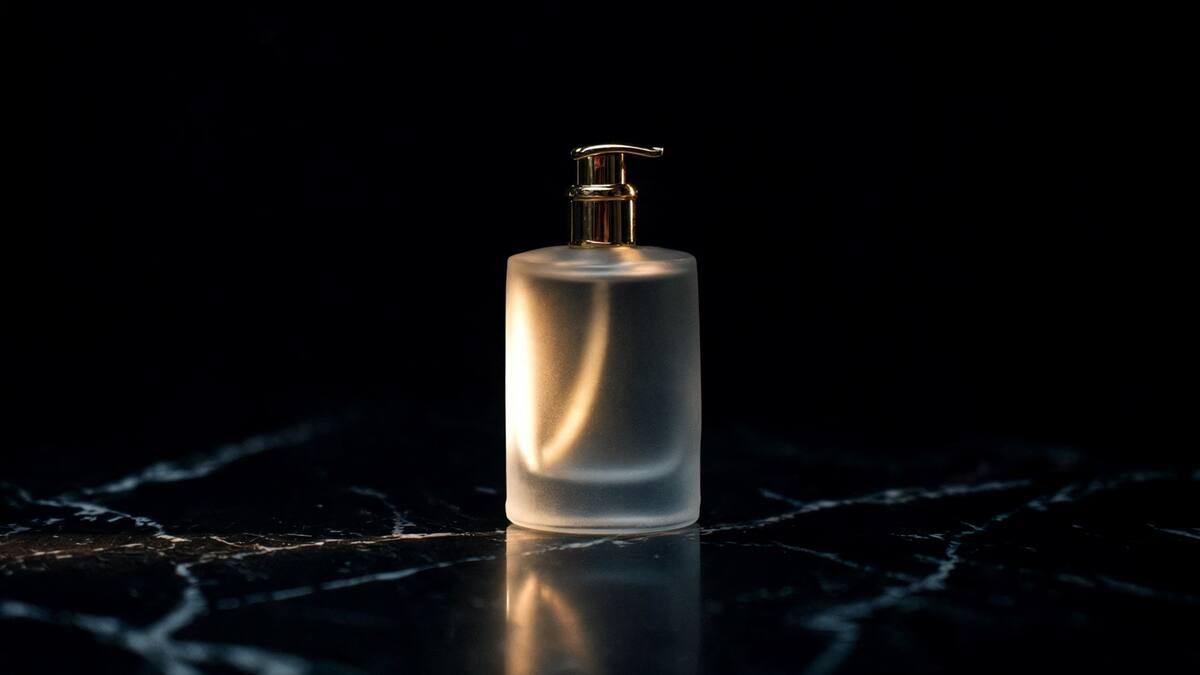
Luxury and cosmetics brands operate on visual perfection. A campaign that shows the product in the world, carried by someone through a space that justifies the price, has meant a model, a location, a crew and a day. AI video production changes what that film costs to make. It does not change the standard the film has to meet.
Photorealistic Texture & Macro Product Visuals
The close-up is where generated video is judged hardest. Production works from product photography the brand already owns. The product is the only real thing in the film, everything else is designed around it, and its details are checked frame by frame against those photographs.
In a luxury bag campaign for Menaki, the hardware, the stitching, the chain and the exact navy had to survive every cut, every change of light and every distance from the camera. For a cosmetics product the details that have to hold are whatever a customer would zoom in on. Across a range, the treatment is approved on a small set first, then applied to the rest with a review pass built into the pipeline.
Virtual Model Campaigns Without a Casting Call
The woman carrying the bag in the Menaki film does not exist. Neither does the travertine staircase, or the colonnade she walks. No model was cast, no usage rights were negotiated and no location was scouted or permitted. The result was a 33-second vertical campaign film with zero shoot days.
The face on screen is either a designed character or a clone of a real person. A character is designed once, approved and held consistent, so the next drop does not start with another casting call and the second video costs materially less than the first. A clone is built from a founder or ambassador who has consented, with ownership and permitted use set out in the agreement. Either way the likeness has to hold: if the hair, the skin or the way a jacket sits drifts between shots, the viewer feels it.
Speeding Up Seasonal & Capsule Launch Campaigns
Fashion and beauty operate on relentless seasonal calendars. The gain is not a cheaper film but that the cost of a campaign stops scaling with the number of looks, locations and seasons you want: a new look each season without a new shoot each season. There is no location scouting, crew booking or weather risk, revisions happen in the pipeline rather than by reshooting, and landscape and vertical cuts come from one production.
Where the Quality Bar Sits
When Kantar studied hundreds of ads made with generative AI, the ones where the AI was obvious scored lower on branding; where nothing gave it away, more than 40 percent landed in the top tier for branded cut-through. Audiences do not mark a film down for how it was made. They mark it down when something looks wrong.
- A face that shifts slightly from one shot to the next.
- A product that changes shape, colour or detail as the camera moves.
- Light and reflections that do not match the room.
Holding those three fixed is the whole job. A customer will forgive an invented building. They will not forgive a clasp that changes shape between shots.
What to Decide Before Production Starts
Every commercial runs through four stages: Define, Design, Develop, Distribute. The storyboard is approved before production begins, which keeps revision rounds cheap and predictable. That approval is also where the brand settles four things.
- The reference. Existing brand films, shared at the brief, become what the storyboard is built against.
- The face. A designed character the brand keeps, or a clone of a named person with that person's consent.
- The label. Whether the film carries a visible Synthetically Generated label on screen, as some of our product films do.
- The deliverables. Broadcast-ready masters in standard delivery specs, landscape and vertical.
When Not to Use AI Video
Whether a concept suits an AI pipeline should be settled at the brief stage, not after you have committed. Without product photography, a packaging specification, a render or a technical drawing to work from, there is nothing to check the film against, so it should not be made. A shot that changes the product is flagged and remade; if it cannot be made to hold, it does not ship: a film that misdescribes the product is worse than no film at all. A campaign built on the likeness of someone who has not agreed to it does not get made.
Sharpen Your Beauty Brand Visuals
NextEdge Studio makes campaign films and product visuals with no location, no crew call, no shoot day, and the product identical in every frame. Share the brief and your existing films; we will say plainly whether the concept suits this way of working.